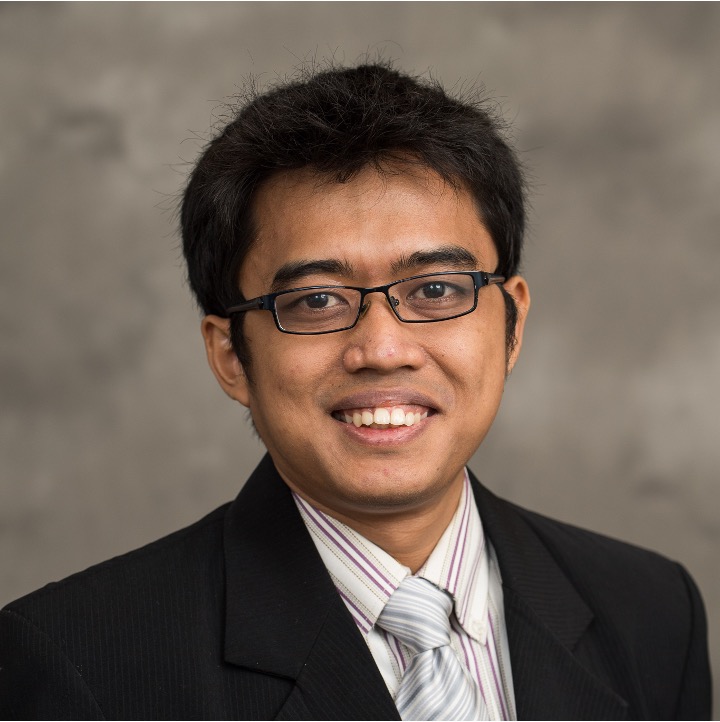
I am an assistant professor in the Industrial and Systems Engineering at King Fahd University of Petroleum and Minerals (KFUPM), Saudi Arabia. I previously served as Executive Director of the Stanford Center for AI Safety and Research Engineer at both the Stanford Intelligent Systems Lab (SISL) and Mineral-X. I obtained my Ph.D. in Mechanical Engineering from Carnegie Mellon University in the Safe AI lab.
My research integrates machine learning, optimization, and simulation to create trustworthy AI systems for high-stakes applications in both safety and sustainability domains. I focus on ensuring equitable and just energy transitions through resilient critical mineral supply chains, safety-aware geothermal and subsurface applications, and robust AI system verification and validation methods that can manage catastrophic failure risks in critical infrastructure.
Beyond research, I enjoy teaching and mentoring students at all levels. I have taught courses on engineering statistics, data-driven analytics and guided numerous research projects. I serve as Editor-in-Chief for OSCM Journal and as a reviewer for leading AI, transportation, and sustainability venues. I'm always interested in collaborating on AI safety and sustainability for critical applications and welcome discussions about potential partnerships—you can find more details in my CV or explore my publications below.
Recent Publications
- Ahmad Alfan Alfian Irfan, Nur Ahmad Khatim, Mansur Arief. “A Closed-Loop Evaluation of Capability Loss and Recovery in Compressed Driving Policies.” arXiv preprint. [Link]
- Mansur Arief, Ali Akarma, Ahmad Alfan Alfian Irfan. “Dijkstra as an Oracle for Online Stochastic Shortest Path Navigation with Provable Guarantees.” arXiv preprint. [Link]
- Jef Caers, Mansur Arief, Céline Scheidt, Lewis Li. “Decision-Making Under Uncertainty Using Artificial Intelligence.” In Decision-Making for Earth Resource Development: Quantifying Uncertainty, Geophysical Monograph Series, pp. 35-82. Wiley, 2026. [Link]
- Saleh Afroogh, Seyd Ishtiaque Ahmed, Petra Ahrweiler, David Alvarez-Melis, Mansur Arief, Emilia Barakova, Falco J. Bargagli-Stoffi, Erdem Biyik, et al. “Beyond Explainable AI (XAI): An Overdue Paradigm Shift and Post-XAI Research Directions.” arXiv preprint. [Link]
- Nur Ahmad Khatim, Mansur Arief. “Optimized Human-Robot Co-Dispatch Planning for Petro-Site Surveillance under Varying Criticalities.” arXiv preprint. [Link]